MISFITS
Kay Walkowiak
October 15 – November 29, 2025
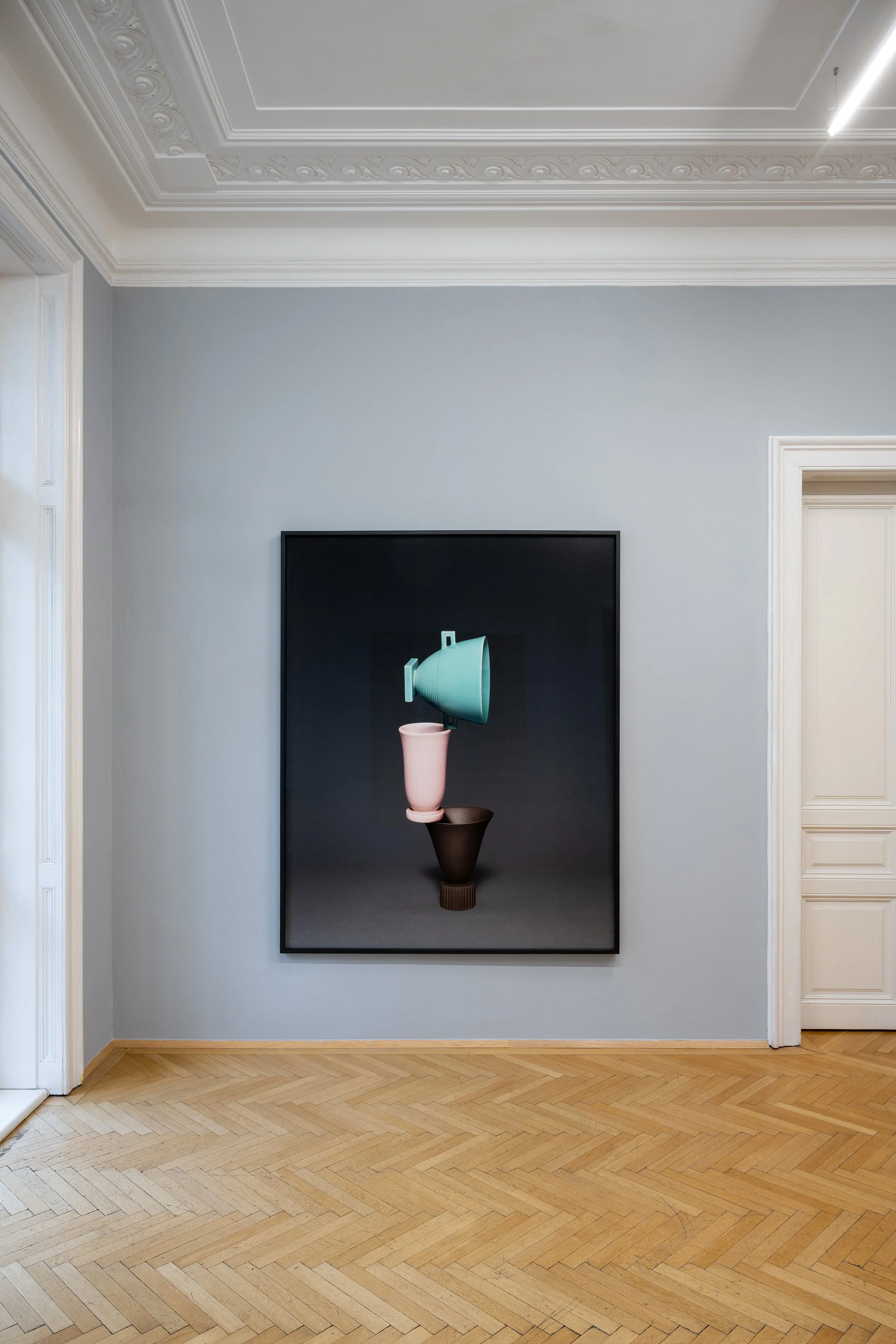
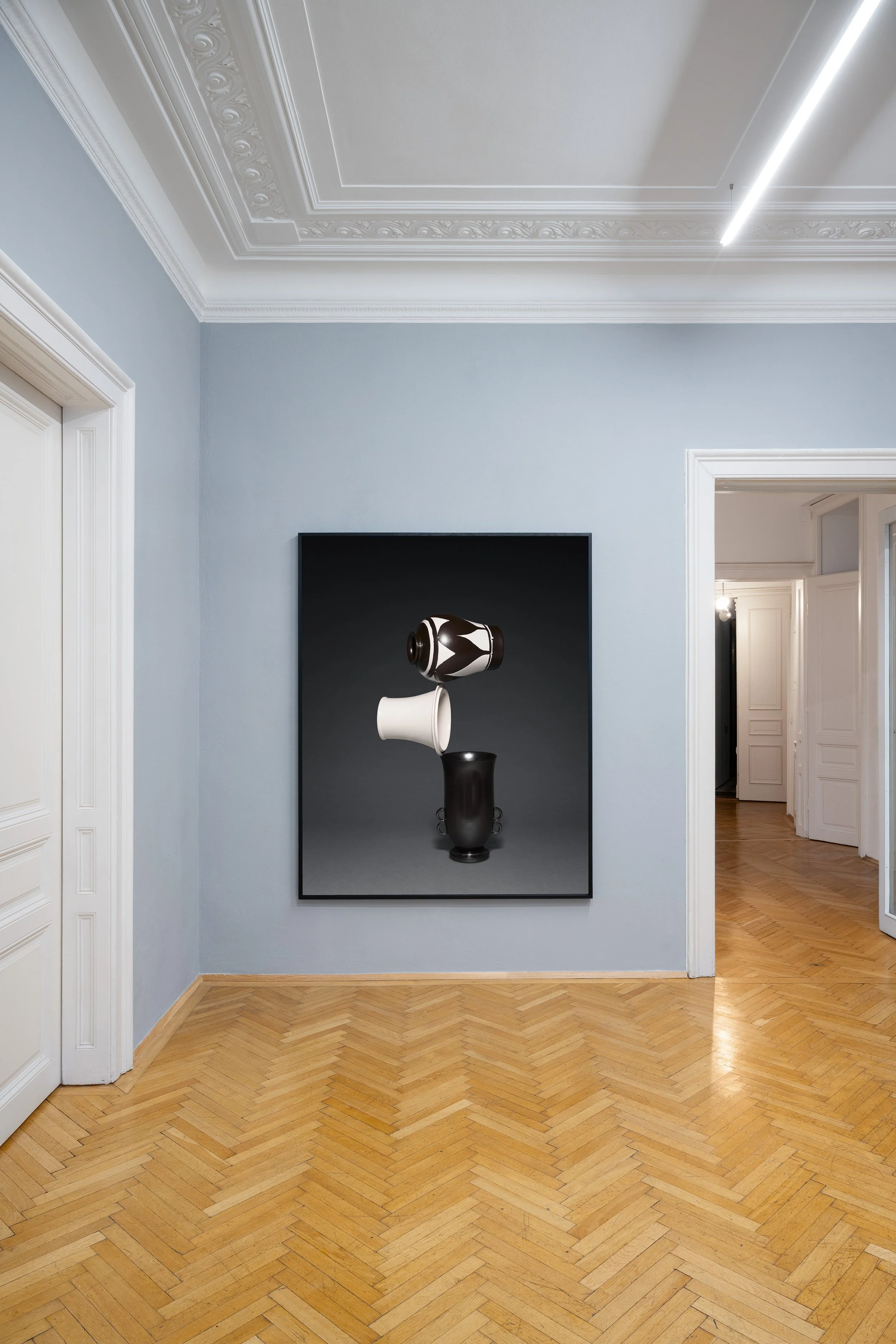
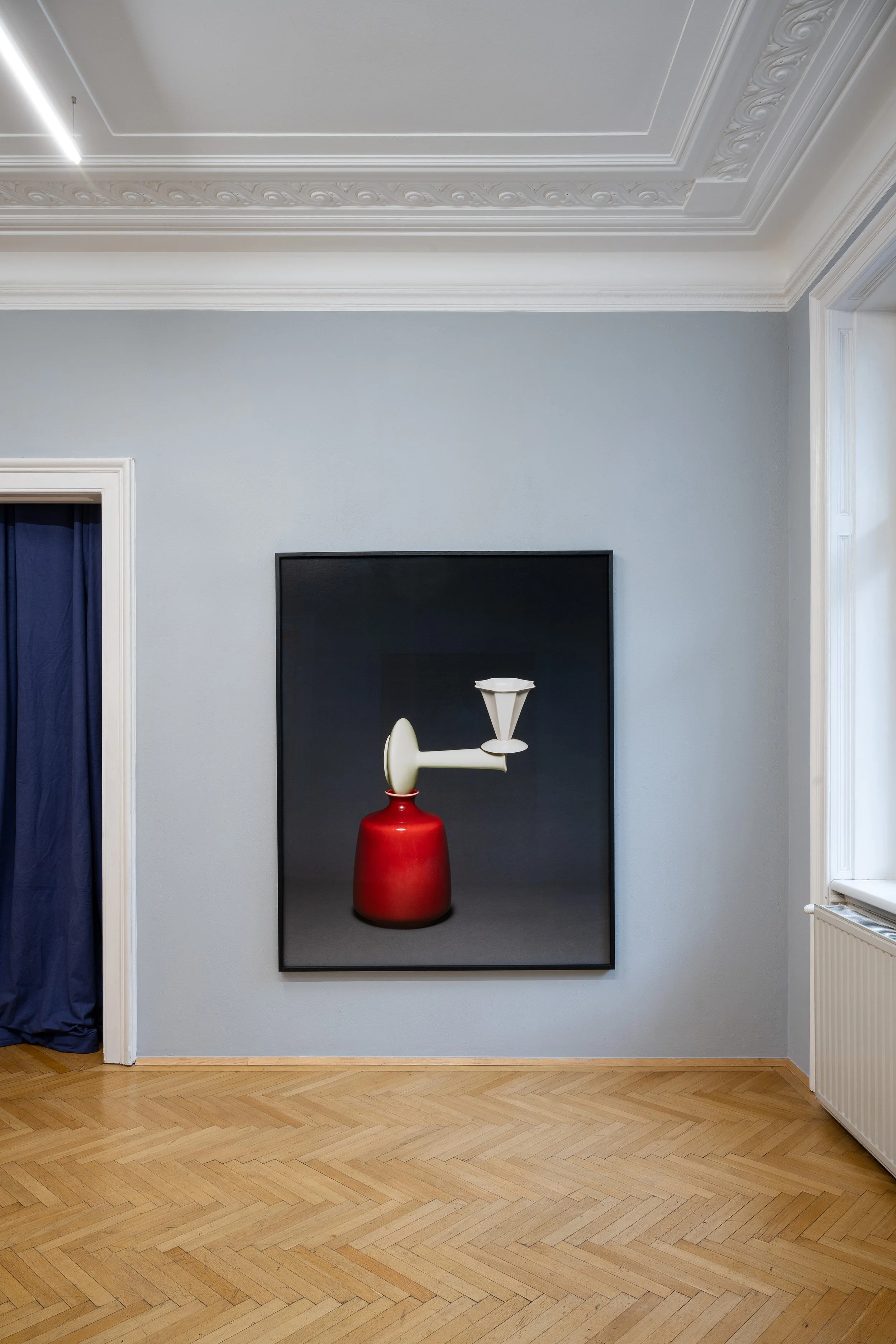
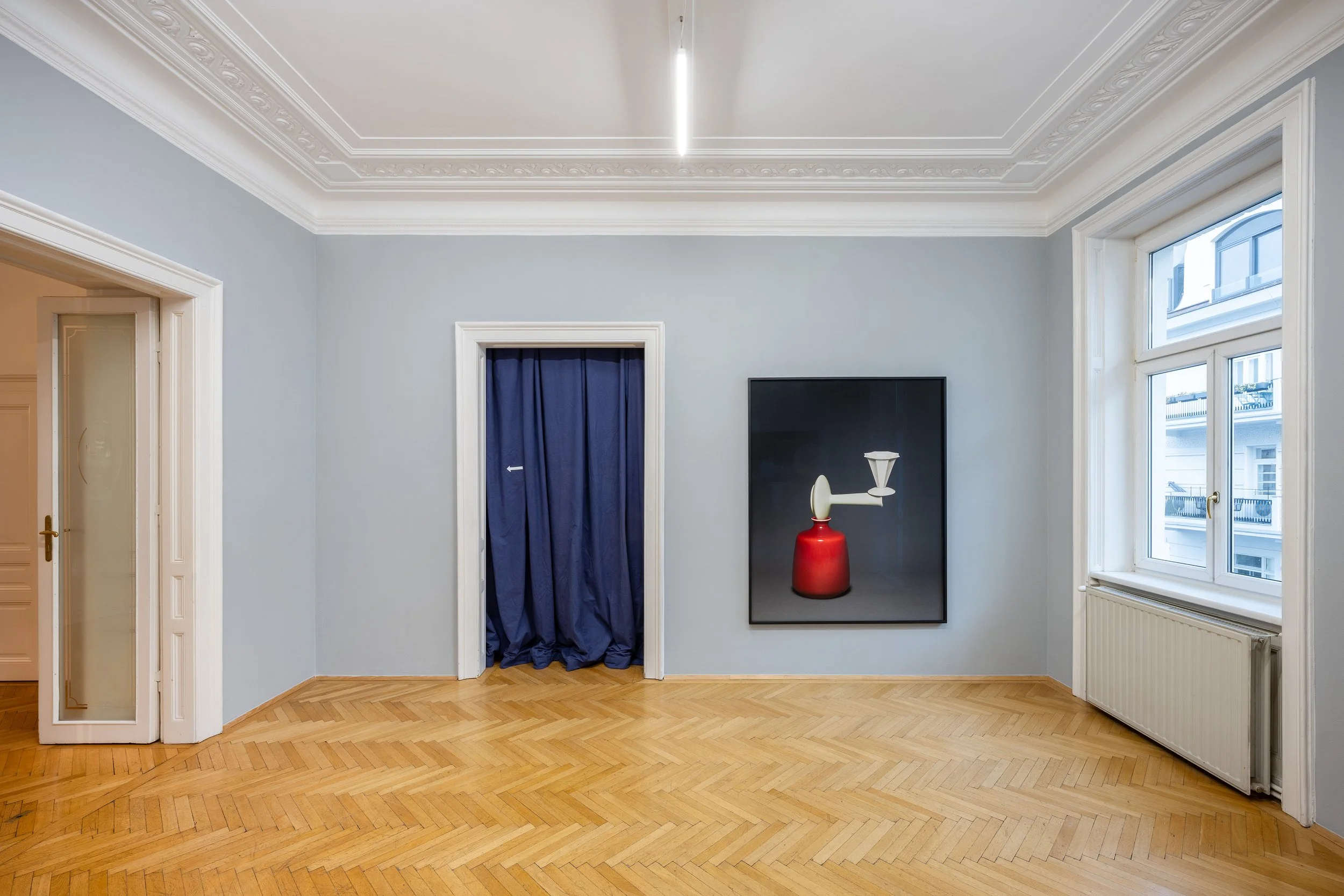
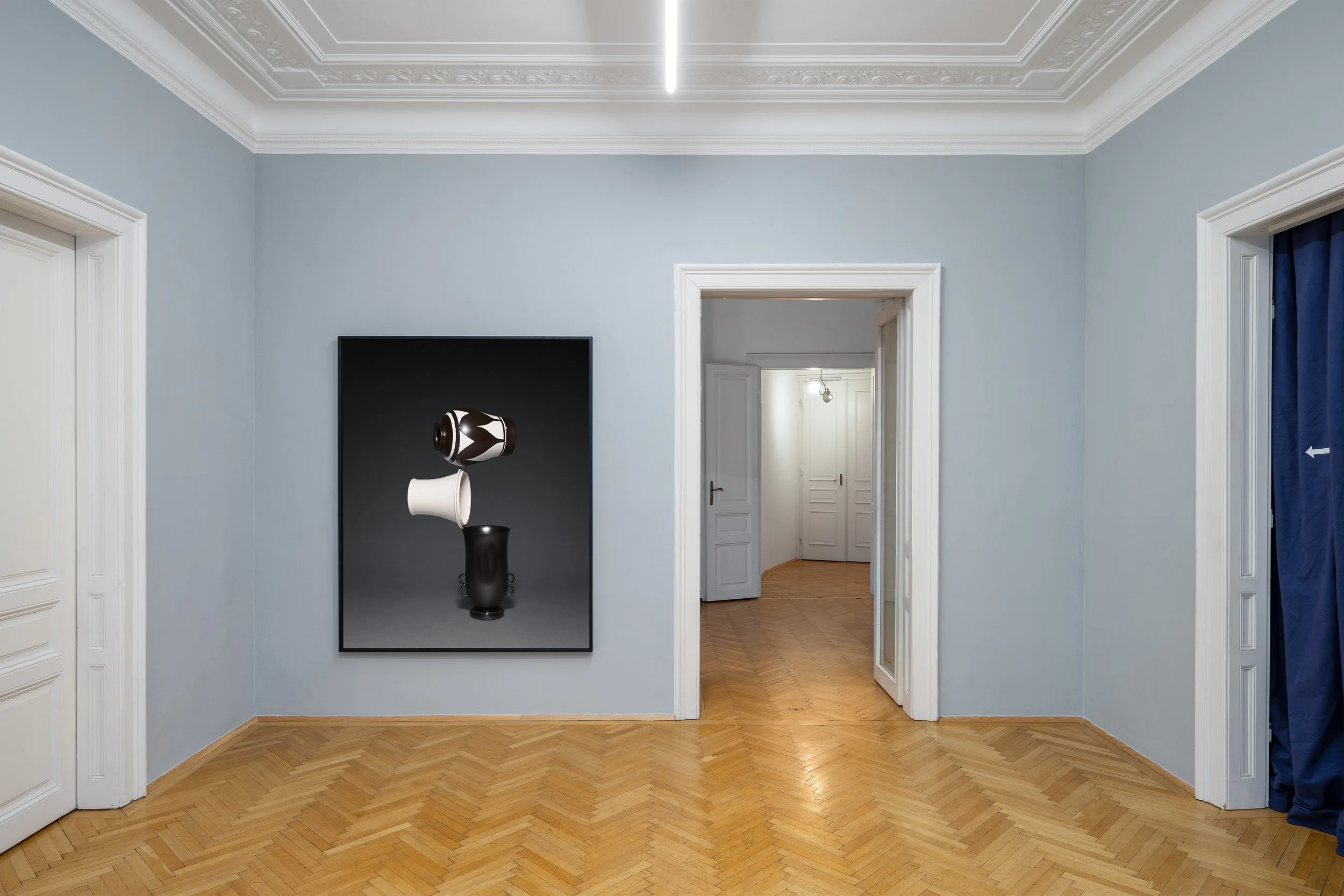
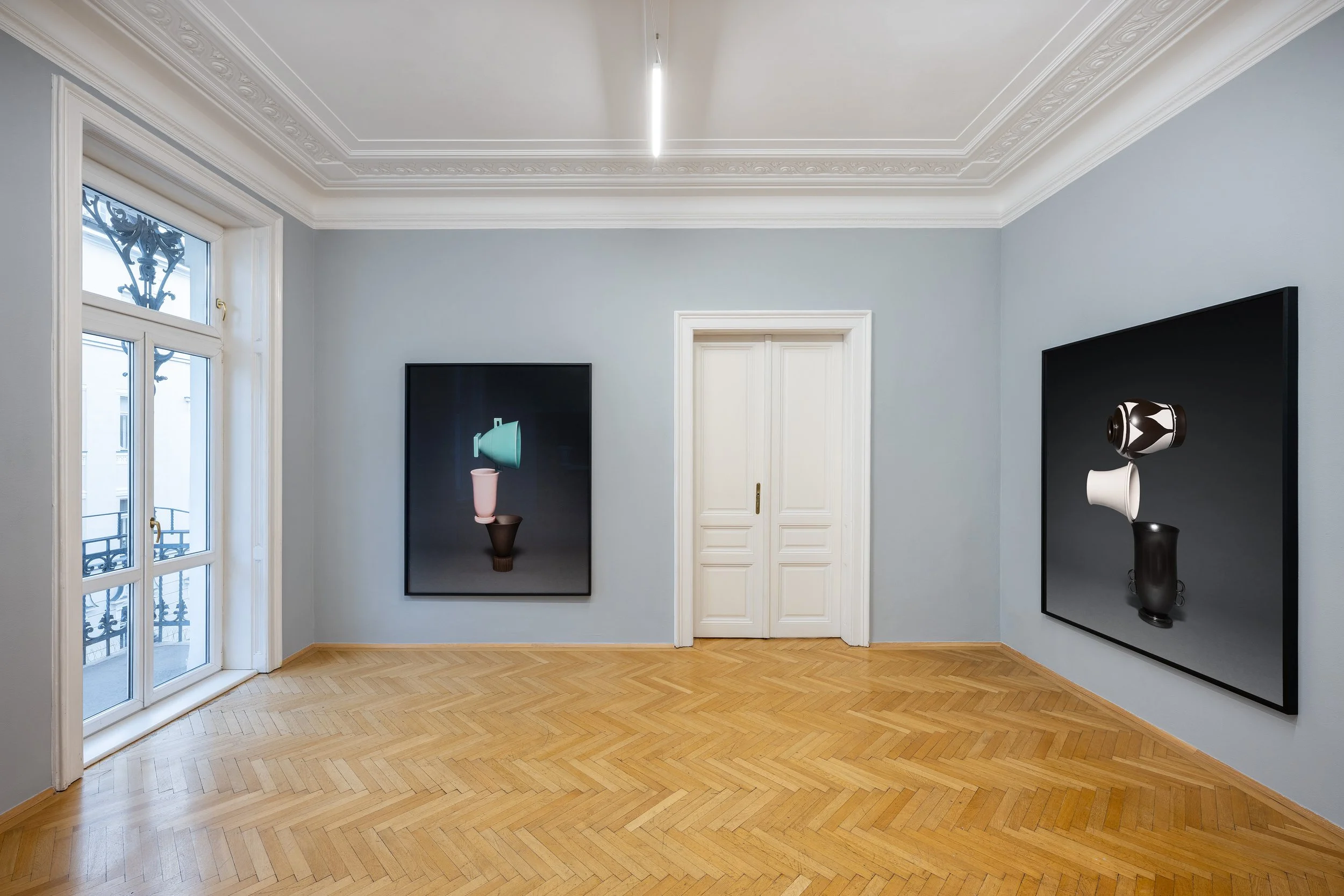
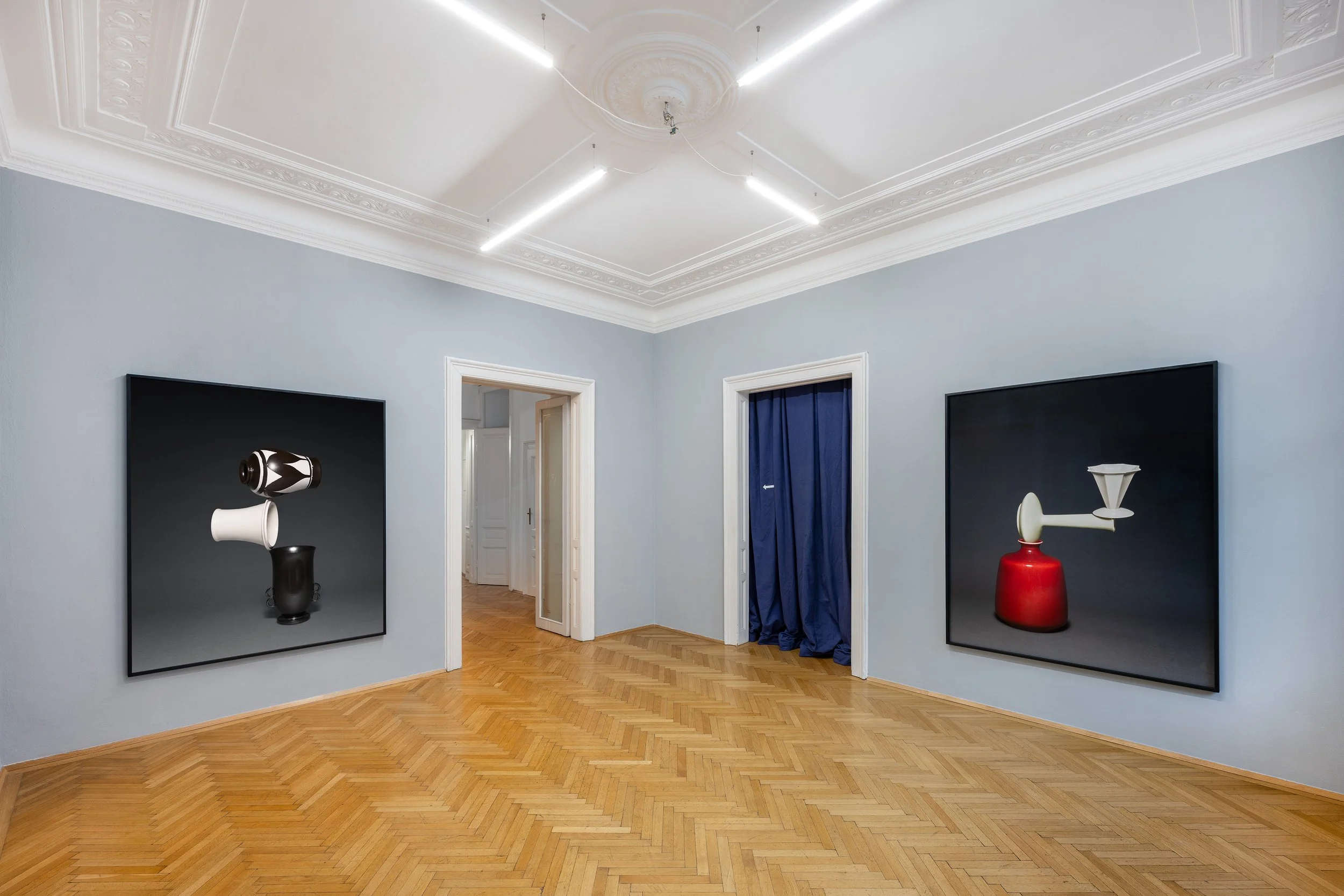
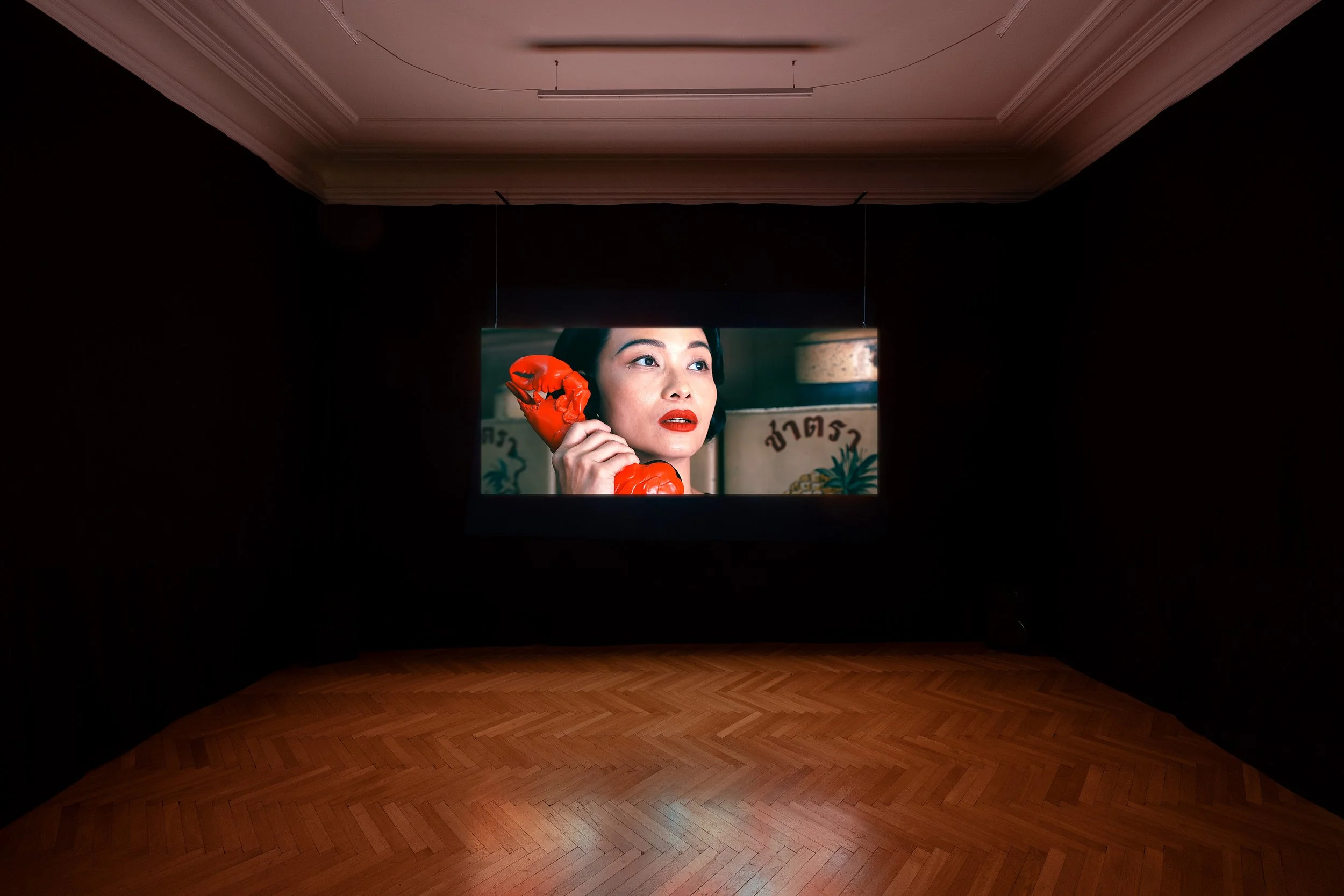
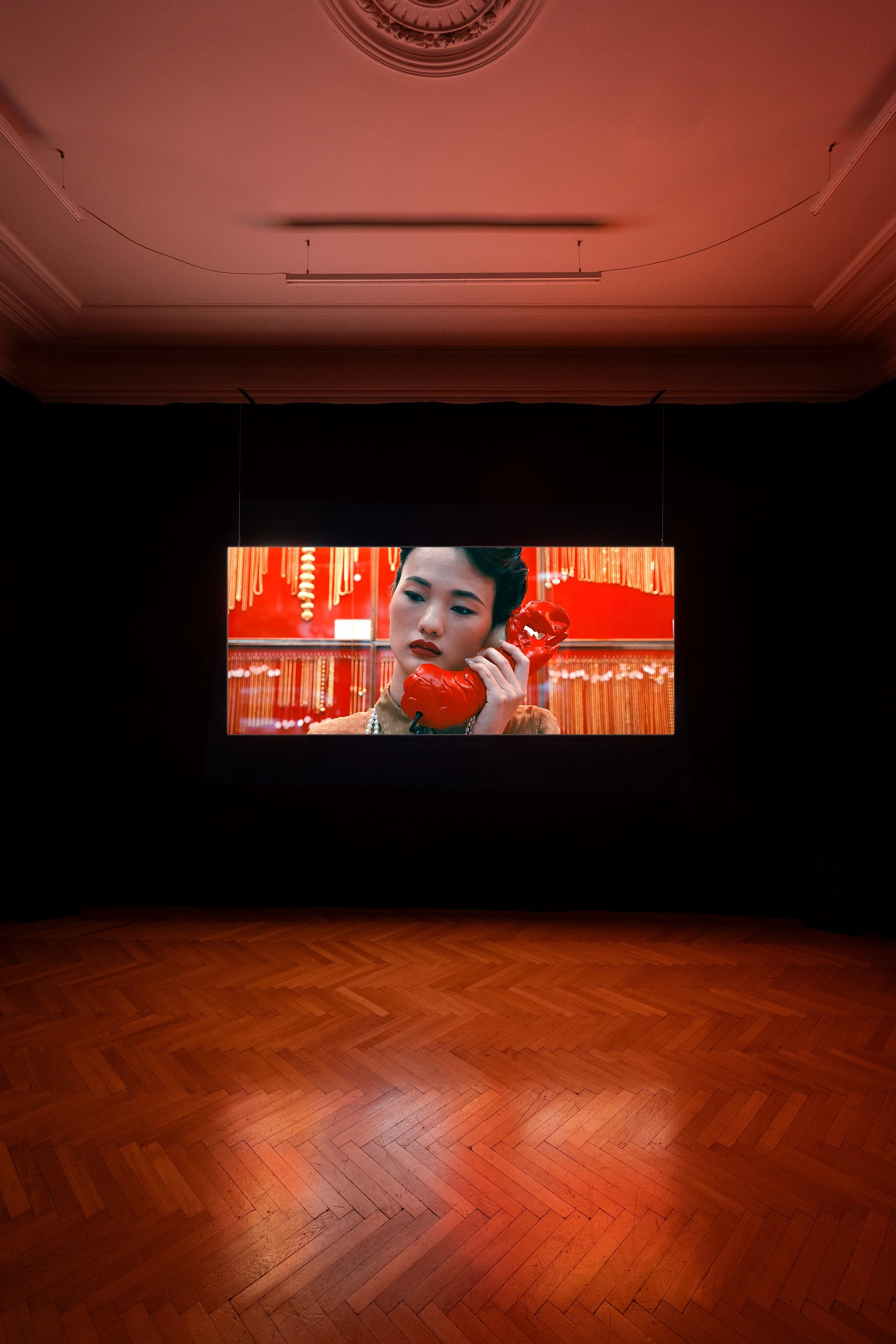
Kay Walkowiak’s works often dwell in moments where the passing of time, the value and logics of art, and the intention in craftsmanship intertwine. For the exhibition Misfits, he presents two bodies of work that reflect on the impossibility–of gravity, shapes, and decay–and on the ways images hold or disturb time. By addressing the tensions between the fictional and the historical, the exhibition moves between the present and a 1960s nostalgia through carefully considered aesthetic decisions—again, a craft.
Misfits (2024) originates in the collection of the Musée national d’archéologie, d’histoire et d’art in Luxembourg, where Walkowiak selected ceramic artefacts and digitally reassembled them into “impossible” or “fictional” sculptures, defying gravity, materiality, and their original shapes, while also liberating them from the logic of the vitrine. What could actually fit together if one found the precise point of tension between a nook or cranny, the curvature of the handle, and the chipped rim of a vase?
These assemblages challenge the museological view of the object: untouchable, sacred, impossible to manipulate except under strict protocols of conservation and display. Rigorous temperature and humidity controls, as well as the careful touch with the aid of a glove that prevents any threat from human skin acidity. What in the museum is sealed, stabilised, and catalogued becomes here unsettled: fragile stacks that could never exist in gravity’s order. Their seamless digital composition challenges perception; only after close observation does one notice the impossibility of their formation. This act reveals what lies at the heart of modern preservation: the insistence that artefacts remain pristine, suspended outside of time. Walkowiak’s “fictional sculptures” playfully expose this impossibility.
The work also calls attention to the shifting agency of objects once removed from everyday use and turned into “vitrined” relics. This gesture recalls Peter Fischli and David Weiss’s Equilibres (A Quiet Afternoon) (1984–86), in which ordinary things teeter on the brink of collapse, or Erwin Wurm’s One Minute Sculptures, where participants embody balance-defying poses. Unlike these ephemeral performances captured “in the moment,” however, Misfits (2024) is consciously fabricated: at first glance, the balance of the objects appears perfect, but upon a second look, their instability becomes apparent. It also echoes the typological study of the photographic image and everyday life objects by Christopher Williams (such as Blocking Template: Ikea Kitchen (Overhead Nr. 1) (2022) and the sleek and hyper-aesthetic intention in the context of image making—and its manipulation—in advertisement, even before the digital era.
A different kind of (un)balance develops in The Call (2023), a short film that follows a sequence of characters picking up incessantly ringing telephones—lobster receivers in homage to Salvador Dalí’s most mischievous surrealist object. Eight variations of the lobster phone become conduits: absurd and subversive, yet insistently linking one scene to the next. Shot in Bangkok, the film lingers on the glamour and turbulence of the city’s 1960s hotels, bars, shops, and pharmacies, shaped by waves of Western tourism, Cold War politics, and the shadow of the Vietnam War.
In this sense, it takes special attention to notice that the characters utter in English the few lines of: “Hello?”, “Ok,” and “Bye-bye” each time a different hand lifts the receiver. The gesture is at once playful and unsettling: an absurd circuit connecting spaces haunted by geopolitics, vanished music scenes, and the city’s ongoing political unrest. Through repetition, the lobster phone becomes less an eccentric prop than a call for connection across temporal layers, suggesting that even in fragile or decaying structures, new possibilities can emerge. This fictional narrative, threaded through suspense, is carried by the ringing lobster and underscored by songs such as Teun-Jai Boon Praraksa’s Ha Fang Kheng Kan, Komi Nilwong’s Majesty Above the Sky, Viparat Piengsuwan’s Jump Jump, and Lester Young’s These Foolish Things. Each character also connects to sites that still exist yet have faded or become abandoned by now: the Atlanta Hotel—once frequented by red-light clientele but also home to writers, artists, and (presumably) music legends like Louis Armstrong—the Dusit Barber, the Mohamad Treasure of Bangkok Stationary Shop, the On Luk Yun Café, and One Yong Choon Tea Shop.
Taken together, Misfits and The Call propose fictions that unsettle the very idea of permanence and progress. The “impossible” balances in the photographs and the looping narrative of the film both gesture toward temporal instability: moments that cannot hold, yet continue to reverberate. This indexicality of time speaks to the impossible pursuit of stopping decay and to the museological logic of stasis, set against the city’s fading facades and constant reconfigurations. Both works point toward larger truths: that history is never stable, that preservation is always an act of construction—a trembling suspension in which collapse and invention remain equally possible.
Lorena Moreno Vera, 2025